

Nigeria’s future will be determined not only by the decisions of those who lead today, but by the opportunities available to those who will lead tomorrow.
In classrooms across the country, young Nigerians are developing the knowledge, ambitions and perspectives that will shape the nation’s institutions, industries and communities for decades to come.
The question confronting Nigeria is whether its educational, economic and political institutions are adequately preparing them for that responsibility.
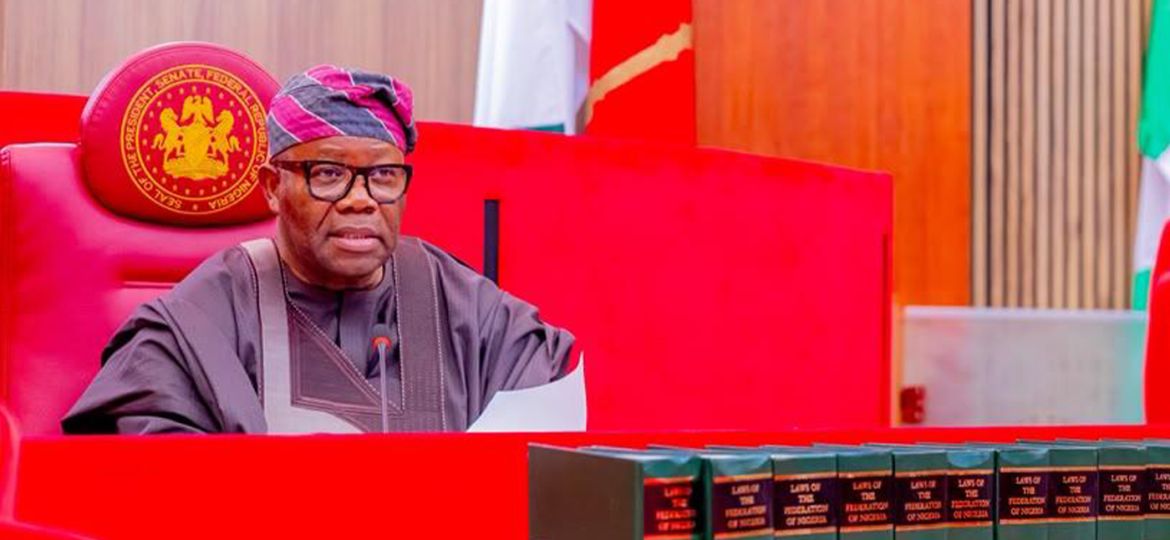
For President of the Senate, Godswill Akpabio, the relationship between education, opportunity and national development has featured prominently in recent public engagements, including discussions on international partnerships, legislative education and the oversight of educational programmes.
These engagements raise a broader national question: how can Nigeria build a generation equipped not merely to inherit the future, but to contribute meaningfully to it?
Education as the Foundation of National Progress
A nation’s development prospects are closely connected to the quality of education available to its people.
Education provides more than academic qualifications. At its best, it develops critical thinking, practical competence, civic awareness and the capacity to solve problems.
For Nigeria, where young people face significant challenges relating to employment, economic opportunity and access to quality learning, strengthening the education system remains an important development priority.
This requires attention across the entire educational journey, from foundational literacy and numeracy to secondary education, technical training, universities and lifelong learning.
It also requires sustained investment in teachers, learning facilities, educational technology and safe learning environments.
The ultimate measure of educational progress must extend beyond enrolment figures and institutional expansion to include what students learn, the competencies they acquire and the opportunities available to them after graduation.
Preparing Young Nigerians for Democratic Leadership
On November 9, 2026, Akpabio urged Nigerian students to develop an interest in legislative activities and prepare themselves for future leadership responsibilities.
His message was delivered at the grand finale of the 11th National Institute for Legislative and Democratic Studies National Quiz Competition in Abuja, where he was represented by Senator Titus Zam.
The Senate President encouraged students to understand the legislature’s responsibilities in lawmaking, oversight and representation.
The significance of that message extends beyond the prospect of young Nigerians eventually occupying political offices.
A functioning democracy depends on citizens who understand their institutions, recognise their constitutional rights and responsibilities, and participate constructively in public affairs.
Young people who understand how laws are made, how public funds are scrutinised and how elected representatives are held accountable are better positioned to contribute to democratic governance.
Leadership development, therefore, should not begin when an individual seeks public office.
It should begin much earlier, through education, mentorship, community participation and opportunities to practise responsibility.
From Academic Qualifications to Practical Competence
Nigeria’s educational future must also be considered alongside the changing demands of work and industry.
Technological advancement is reshaping employment, production, commerce and public administration.
Artificial intelligence, software engineering, renewable energy, advanced manufacturing and digital services are creating new demands for specialised knowledge.
Preparing young Nigerians for these opportunities requires stronger connections between educational institutions and the industries in which graduates are expected to contribute.
This was a central theme of Akpabio’s engagement with a delegation of the German Bundestag in November 2026.
During the meeting, the Senate President advocated expanded cooperation between Nigerian educational institutions and German technical colleges, employers and industries.
He identified engineering, digital technology, artificial intelligence and entrepreneurship as areas where educational partnerships could strengthen workforce development.
Germany’s established systems of vocational education and industry-linked training offer relevant lessons for Nigeria, particularly in connecting classroom instruction with practical experience.
Such partnerships, however, must be assessed by their implementation and outcomes.
The important questions include how many students gain access to training, whether programmes respond to labour-market needs and whether participants acquire skills that improve their employment or entrepreneurial prospects.
Educational Investment Requires Accountability
Expanding educational opportunities also requires effective management of public resources.
In July 2026, the Senate expanded the mandate of an ad hoc committee investigating the Safe School Initiative to examine the funding, implementation and accountability of several education and social intervention programmes.
The expanded investigation covered institutions and programmes including the Tertiary Education Trust Fund, the Nigerian Education Loan Fund and the Universal Basic Education Commission.
The committee was tasked with examining matters such as educational infrastructure, student safety, programme administration and access to education financing.
The development highlights an important distinction between announcing an intervention and establishing whether it achieves its intended purpose.
Education loans must reach eligible students through accessible and transparent processes.
Infrastructure funding must translate into functional facilities.
School safety programmes must address identifiable risks.
Public oversight plays a critical role in determining whether these objectives are being achieved.
The outcomes of such investigations, including any findings and corrective measures, are essential to evaluating their effectiveness.
Opportunity Must Extend Beyond Major Cities
The next generation of Nigerian leaders will emerge from communities throughout the federation.
Their prospects should not be determined solely by whether they grow up in a major commercial centre or a community with limited infrastructure.
A national approach to educational opportunity must therefore address geographical disparities in access to schools, technology, electricity, connectivity and qualified teachers.
It must also recognise the different pathways through which young people contribute to development.
Some will pursue university education. Others will develop careers through technical colleges, apprenticeships, entrepreneurship or specialised professional training.
These pathways should be understood as complementary components of national workforce development.
Nigeria requires researchers and engineers, but it also requires skilled technicians, teachers, healthcare workers, agricultural specialists, entrepreneurs and capable public administrators.
The challenge is to create an environment in which talent can be developed and applied productively, regardless of background or location.
Building Institutions That Outlast Individual Leaders
Preparing future leaders also means strengthening the institutions they will eventually inherit.
Leadership cannot be separated from the systems through which public decisions are made and implemented.
Strong institutions depend on transparent procedures, respect for constitutional responsibilities, competent administration and mechanisms for public accountability.
For the National Assembly, this includes the responsibility to examine legislation, scrutinise public expenditure and represent the interests of citizens.
For educational institutions, it includes maintaining academic standards, promoting integrity and developing graduates capable of independent thought.
For young Nigerians, it means understanding that public service is a responsibility requiring preparation, competence and ethical judgement.
The objective should be a generation that is not only ambitious, but equipped to contribute to institutions that serve the public interest.
A National Responsibility
Government cannot achieve this transformation alone.
Families, educators, businesses, professional associations, civil society organisations and development partners all have roles to play.
Employers can contribute through internships, apprenticeships and partnerships with educational institutions.
Universities can strengthen their connections with research, innovation and industry.
Public institutions can improve access to information and opportunities for civic participation.
Legislators can support these efforts through appropriate laws, budgetary scrutiny and sustained oversight.
The effectiveness of these contributions will depend on coordination, continuity and measurable results.
The Future Must Be Prepared For
Nigeria’s young population represents both a significant opportunity and a substantial policy responsibility.
Education without practical competence can leave graduates poorly prepared for employment.
Ambition without opportunity can lead to frustration.
Political participation without civic understanding can weaken public discourse.
Addressing these challenges requires more than inspirational statements. It requires institutions capable of delivering quality education, expanding economic opportunity and encouraging responsible citizenship.
Akpabio’s recent engagements on legislative education, skills development and educational accountability provide relevant points of reference for this national conversation.
Their longer-term significance will depend on the policies, partnerships and institutional improvements that follow.
Nigeria’s next generation will inherit the consequences of today’s decisions.
Preparing them to lead, innovate and serve is therefore not simply an educational objective.
It is a national development responsibility.

