

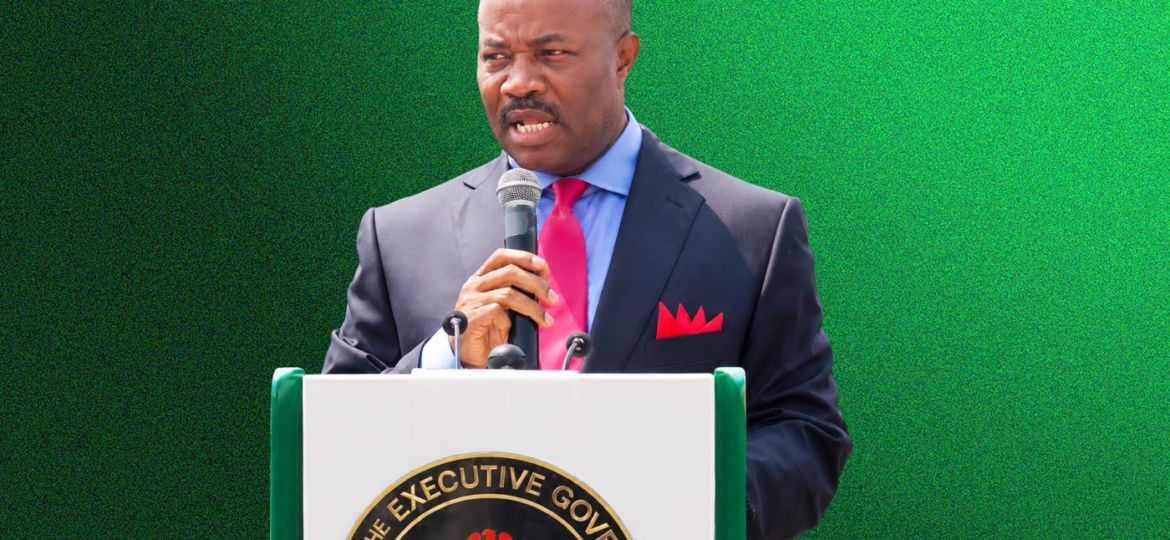
The story of Godswill Akpabio is one deeply connected to transformation, service, and a lasting commitment to impact. Long before assuming national leadership as President of the Senate, his journey as Governor of Akwa Ibom State marked a defining era that reshaped the identity and developmental trajectory of the state.
When Godswill Akpabio assumed office as Governor in 2007, Akwa Ibom was widely regarded as a state with enormous potential but limited infrastructure and national visibility. What followed over the next eight years became known as the Uncommon Transformation Agenda—a development vision focused on infrastructure, human capital, economic growth, and institutional expansion.
Under his administration, Akwa Ibom witnessed one of the most aggressive infrastructure drives in its history. Roads, bridges, flyovers, hospitals, schools, and public institutions emerged across the state, connecting communities and opening new economic opportunities. His government pursued extensive urban renewal projects while also extending development into rural communities through road construction and electrification projects.
One of the landmark achievements of the administration was the expansion and repositioning of the Akwa Ibom International Airport, alongside investments that helped strengthen the state’s long-term economic and tourism potential. His administration also delivered the internationally recognized Godswill Akpabio International Stadium, a project that elevated Akwa Ibom’s profile both nationally and globally.
Education and healthcare equally formed major pillars of his governance. His administration implemented free and compulsory education, helping expand access to learning for thousands of children. Significant investments were also made in healthcare infrastructure and public services aimed at improving the quality of life of the people.
Beyond physical projects, many supporters and observers remember the era for the confidence it restored in the identity and possibilities of Akwa Ibom State. The administration projected a strong narrative of development, ambition, and visibility that repositioned the state within national discourse.
Today, as Senate President of the Federal Republic of Nigeria, the journey continues on a broader national stage. While the offices may evolve, the underlying mission remains consistent – to build institutions, create opportunities, strengthen governance, and leave behind a legacy of impact that endures beyond politics.
This throwback is more than a reflection on the past; it is a reminder that leadership is ultimately measured not only by the positions held, but by the lives touched, the systems improved, and the future made possible for generations to come.

