

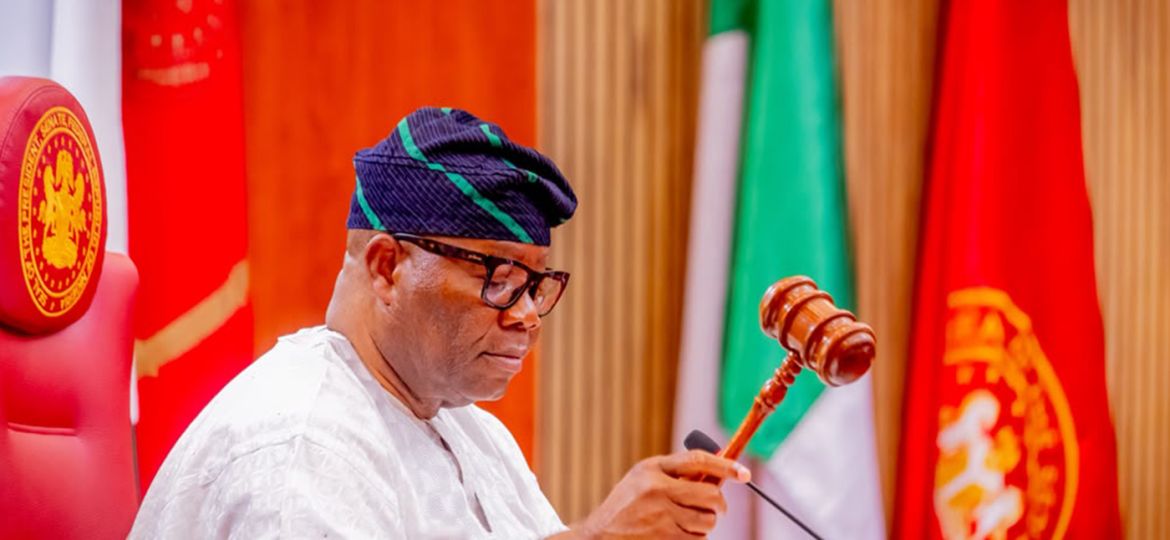
Understanding how constitutional revenue allocation, state autonomy and public accountability influence development throughout the federation.
The strength of a federal system is measured not simply by how power is distributed, but by whether that distribution enables governments to meet the needs of the people.
In Nigeria, discussions about true federalism have long centred on resource allocation, fiscal autonomy, constitutional responsibilities and the relationship between the Federal Government, states and local government councils.
These questions have acquired renewed significance as state governments manage changing revenue flows, increasing demands for public services and expectations for visible development.
President of the Senate Godswill Akpabio recently brought the issue into public discussion during an engagement in Benin City, Edo State, where he linked constitutional revenue distribution with the capacity of state governments to meet financial obligations and undertake infrastructure projects.
His remarks provide an opportunity to examine a central question in Nigeria’s development: what should true federalism mean in the everyday lives of citizens?
Understanding the Constitutional Foundation
Nigeria’s federal structure establishes different responsibilities for the Federal Government, the 36 states and local government councils.
Section 162 of the 1999 Constitution, as amended, provides for the Federation Account and the distribution of federally collected revenues in accordance with constitutional and statutory arrangements.
The revenue allocation framework recognises principles including population, equality of states, internally generated revenue, land mass, terrain and population density.
It also provides for the principle of derivation in relation to revenues from natural resources.
These provisions reflect an attempt to balance the financial requirements of different levels of government within a diverse federation.
However, constitutional allocation is only one dimension of federalism.
A functional federal system also requires clarity about governmental responsibilities, effective institutions and accountability for the use of public resources.
Akpabio’s Position on Revenue Distribution
During his remarks in Benin City in November 2026, Akpabio attributed improvements in the fiscal capacity of state governments to the Tinubu administration’s approach to distributing revenues from the Federation Account.
He argued that increased resources were enabling states to meet salary obligations and undertake development projects.
The Senate President also pointed to infrastructure activities in Edo State and other parts of the South-South as examples of development he associated with improved fiscal conditions.
These were assessments made by Akpabio in a political address.
Their broader significance can be evaluated through independently published revenue allocation figures, state budgets, audited financial statements, project records and information about outstanding financial obligations.
The important policy question is whether changes in available resources are translating into sustainable improvements in public services and economic opportunity.
Revenue Allocation and State Capacity
State governments depend on a combination of Federation Account transfers and internally generated revenue to finance their responsibilities.
These resources support public administration, education, healthcare, infrastructure, security-related expenditure and other programmes within state authority.
The Central Bank of Nigeria’s economic reporting for the second quarter of 2026 illustrates the differences in the amounts received by individual states.
According to the report, Lagos received approximately ₦363.35 billion in Federation Account allocations during the quarter, while Rivers received ₦255.84 billion, Delta ₦239.75 billion and Akwa Ibom ₦215.40 billion.
The figures demonstrate the scale of transfers available to some states, but they do not, on their own, establish how efficiently those resources were spent.
A state receiving substantial allocations may still face major infrastructure deficits, debt obligations or service delivery challenges.
Similarly, a state receiving less revenue may demonstrate stronger outcomes in particular areas through effective planning and expenditure management.
For that reason, fiscal performance must be assessed through both the resources available and the results achieved.
From Revenue to Development
For citizens, the value of fiscal federalism is most visible in the quality of public services.
A functioning school, an accessible healthcare facility, a reliable road network or a well-maintained water system represents a practical outcome of public expenditure.
The same applies to the timely payment of public workers, support for local economic activity and the maintenance of essential infrastructure.
These outcomes require more than the receipt of government revenue.
They depend on budget priorities, procurement systems, project management, institutional competence and effective oversight.
A government may announce several projects, but meaningful assessment requires information about their costs, completion status, quality and public usefulness.
True federalism should therefore encourage both greater governmental capacity and stronger responsibility for performance.
Autonomy and Accountability Must Advance Together
One of the central arguments for fiscal federalism is that governments closer to communities may be better positioned to understand local needs.
State and local authorities can identify priorities that differ across Nigeria’s geographical and economic environments.
A coastal community may require particular attention to erosion and transport infrastructure.
An agricultural community may place greater emphasis on rural roads, irrigation and market access.
A rapidly expanding urban centre may face growing demands for housing, sanitation and public transport.
Greater fiscal discretion can support more responsive decision-making.
However, autonomy without accountability creates risks.
Public resources must remain subject to transparent budgeting, independent audit, legislative scrutiny and appropriate public oversight.
Citizens should be able to determine what their governments received, what they planned to spend and what was actually delivered.
The effectiveness of federalism ultimately depends on the relationship between governmental authority and public responsibility.
The Role of the National Assembly
Nigeria’s National Assembly has an important constitutional role in matters affecting federal arrangements.
Its responsibilities include legislation, oversight and participation in constitutional amendment processes.
Questions involving revenue allocation, the distribution of governmental powers and the structure of public institutions can require legislative consideration.
Under Akpabio’s leadership, the Senate has participated in broader constitutional reform discussions, including proposals relating to state policing.
Such proposals demonstrate how debates about federalism extend beyond financial arrangements into questions of governance, security and institutional responsibility.
However, constitutional reform must also consider implementation capacity, safeguards, financial sustainability and the protection of citizens’ rights.
The success of any reform depends not only on the legal powers it creates, but also on the institutions responsible for exercising those powers.
Local Governments and Grassroots Development
A discussion of true federalism would be incomplete without considering local government administration.
Local government councils occupy an important position in Nigeria’s constitutional and administrative structure.
They are associated with services and responsibilities that directly affect communities, including local infrastructure and other grassroots functions.
Questions about their financial autonomy, administrative capacity and accountability remain central to the country’s federalism debate.
Ensuring that public resources reach the intended level of government is important.
Equally important is ensuring that those resources are managed transparently and used for legitimate public purposes.
Grassroots development requires both financial access and effective local institutions.
Building a More Productive Federation
Fiscal federalism should also encourage states to strengthen their economic foundations.
While Federation Account transfers remain important, long-term fiscal resilience benefits from productive local economies and sustainable sources of internally generated revenue.
States can pursue this objective by improving the conditions for investment, supporting agricultural productivity, developing infrastructure and strengthening business administration.
The objective should not simply be to increase tax collections.
It should be to expand economic activity in ways that create employment, encourage enterprise and improve living standards.
Economic development also requires cooperation between different levels of government.
Major transport corridors, electricity infrastructure, security arrangements and environmental challenges frequently cross state boundaries.
A productive federation must therefore combine appropriate autonomy with effective intergovernmental coordination.
Measuring the Success of Federalism
The debate over true federalism is sometimes reduced to the question of which level of government should control particular powers or resources.
Those questions matter, but they are not the complete measure of success.
A more comprehensive assessment should ask:
Are states better able to fulfil their responsibilities?
Are public services becoming more accessible and reliable?
Are budgets and expenditures sufficiently transparent?
Are development projects completed and maintained?
Are local economies becoming more productive?
Are citizens able to hold their governments accountable?
These questions move the discussion from constitutional theory to practical governance.
They also provide a framework for evaluating claims about the benefits of fiscal reform.
Revenue Is a Means, Not the Final Objective
Akpabio’s recent remarks in Edo State have brought renewed attention to the relationship between federal revenue distribution and development at the state level.
The constitutional framework provides the basis for allocating resources, while elected governments remain responsible for the decisions that determine how those resources are used.
The challenge for Nigeria is to ensure that increased fiscal capacity is accompanied by stronger institutions, transparent expenditure and measurable improvements in citizens’ lives.
True federalism should not be understood merely as the distribution of money or authority.
It should be understood as a system in which responsibility is clearly assigned, resources are managed effectively and governments are answerable for their performance.
For citizens, its success will ultimately be judged not by the size of allocations announced, but by the quality of development experienced in their communities.

