

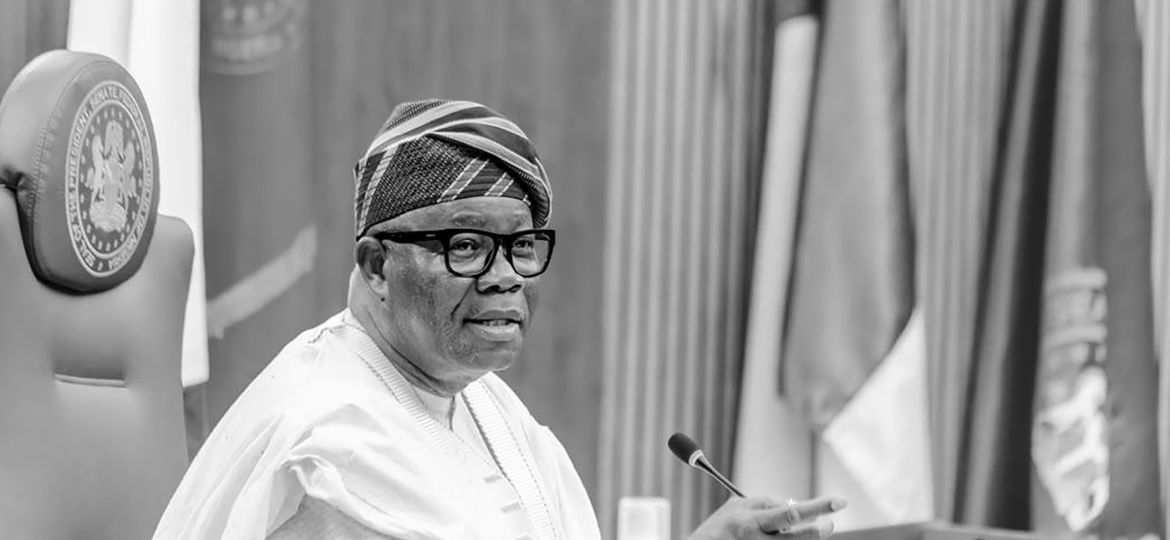
Expressions of support from senators for the continued leadership of Senate President Godswill Akpabio have brought renewed attention to the importance of trust, institutional stability and the responsibilities of parliamentary leadership.
During plenary on Thursday, 15 October 2026, members of the Nigerian Senate publicly expressed confidence in Akpabio’s continued leadership, with some endorsing his return as President of the Senate in the 11th National Assembly.
The declarations came from Senate Chief Whip, Senator Tahir Monguno, representing Borno North, and Senator Cyril Fasuyi, representing Ekiti North, during proceedings that also addressed the importance of responsible public interpretation of legislative debates.
While the endorsements attracted attention for the declaration that there was “no vacancy” in the Senate presidency, they also raised a broader question about leadership, continuity and the responsibilities entrusted to those who hold public office.
An Expression of Confidence from Senate Colleagues
Speaking during plenary, Senator Monguno expressed confidence that many serving senators would return to the National Assembly following the 2027 general elections.
He went further to declare his support for continuity in the leadership of the Senate, including the offices of Senate President, Deputy Senate President and other principal officers.
Senator Fasuyi subsequently supported the declaration, expressly endorsing Akpabio for another term as Senate President.
Following their contributions, Akpabio invited senators present to indicate their position, receiving a strong affirmative response from the chamber.
The declarations represented a public expression of support from fellow lawmakers for the continuation of the current Senate leadership.
Although the composition and leadership of the 11th National Assembly will ultimately be determined through the appropriate electoral and parliamentary processes, the endorsements have become part of the wider conversation about continuity and institutional stability ahead of 2027.
Leadership Beyond Political Endorsements
The responsibilities of the Senate President extend far beyond presiding over plenary sessions.
As Chairman of the National Assembly, Akpabio occupies an office central to legislative coordination, parliamentary procedure, institutional cooperation and the effective discharge of the legislature’s constitutional responsibilities.
The 10th Senate operates within a democratic institution where lawmakers represent different constituencies, political interests and perspectives.
Managing those differences requires dialogue, respect for parliamentary rules and a commitment to ensuring that legislative disagreements do not prevent the institution from carrying out its duties.
Public expressions of confidence among colleagues can be significant, but the enduring measure of legislative leadership remains the institution’s ability to fulfill its responsibilities to the Nigerian people.
Lawmaking, representation, oversight and accountability must continue to define the work of the Senate, irrespective of political developments or discussions about future leadership.
Constructive Debate and Respect for Differences
The endorsements followed Akpabio’s response to criticism arising from an earlier debate on the Suicide Prevention Bill 2026, sponsored by Senator Asuquo Ekpenyong of Cross River South.
The proposed legislation seeks to establish a national framework for suicide prevention, including provisions concerning the decriminalisation of attempted suicide, medical treatment and rehabilitation.
Akpabio’s contributions during the debate had drawn criticism, including concerns about their implications for religious communities and the treatment of people experiencing suicidal crises.
Addressing the controversy during Thursday’s plenary, the Senate President maintained that legislative contributions should be understood in their proper context and that differences of opinion were a normal part of parliamentary deliberation.
He also rejected suggestions that his remarks were intended to disparage Islam, referring to his longstanding relationships across religious communities and his record of supporting religious pilgrimages during his tenure as Governor of Akwa Ibom State.
The exchange underscored the importance of responsible communication, respect for religious diversity and careful consideration of the issues before the legislature.
It also highlighted the need for legislative debates on sensitive matters, particularly those involving mental health and public welfare, to remain focused on the substance and implications of proposed laws.
Keeping the Focus on Nigeria
As the 10th National Assembly continues its legislative work, the responsibilities before the Senate remain substantial.
Across the country, Nigerians expect their representatives to address insecurity, economic hardship, infrastructure challenges, youth development and the delivery of essential public services.
Meeting those expectations requires sustained legislative attention, cooperation among lawmakers and effective oversight of government institutions.
For the Senate under Akpabio’s leadership, these responsibilities remain central to its constitutional mandate.
The public endorsements ahead of the 11th National Assembly form part of the political developments surrounding the legislature. They do not diminish the importance of the work still required of the present Assembly.
Indeed, the greater responsibility of public leadership is to ensure that political confidence is matched by institutional performance and meaningful service.
The Responsibility That Comes with Trust
Trust in public leadership carries expectations.
It demands accountability, openness to differing views, respect for institutions and a continuing commitment to the people whose interests elected representatives are entrusted to serve.
The support expressed by senators during plenary provides an opportunity to reflect on those responsibilities rather than merely celebrate the declarations themselves.
As discussions about the next National Assembly gradually take shape, the immediate task remains clear: the Senate must continue to legislate, represent Nigerians and exercise its oversight responsibilities in the public interest.
For Senator Godswill Akpabio and his colleagues, the work of the 10th Senate continues.
Beyond declarations of support and questions of political succession, the lasting measure of leadership will be found in the strength of the institutions it serves and the difference those institutions make in the lives of Nigerians.

