

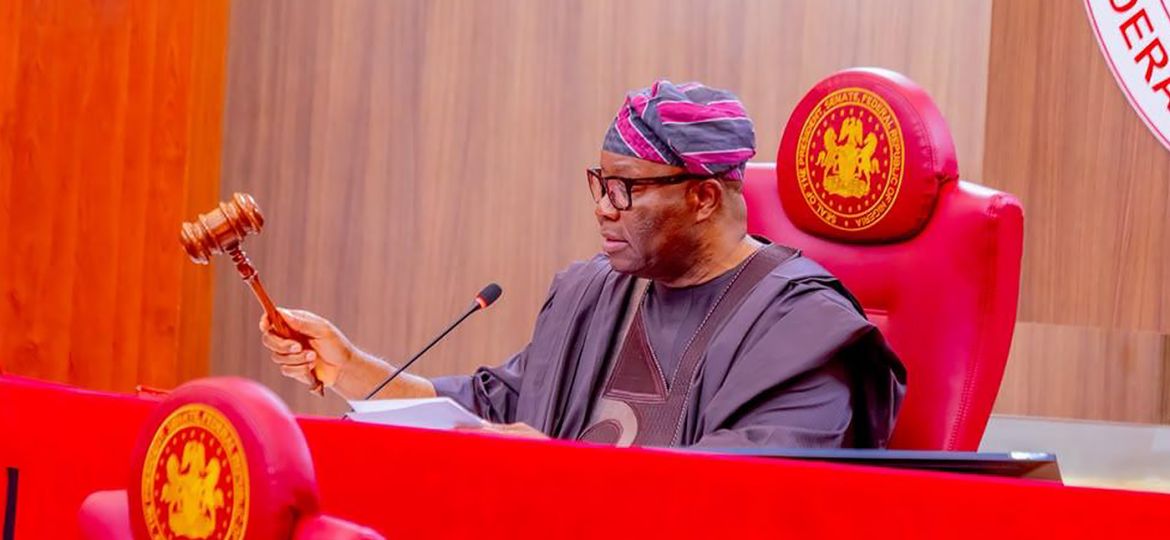
The responsibility of parliamentary leadership goes beyond making laws. It demands institutional integrity, effective oversight, responsible cooperation and an enduring commitment to the Nigerian people.
The strength of a democracy rests not only on the authority of its institutions, but on the principles that guide their conduct and the confidence they inspire among the people.
At the heart of Nigeria’s constitutional democracy stands the National Assembly, entrusted with the responsibility of making laws, representing citizens and ensuring that the exercise of public power remains subject to scrutiny and accountability.
For the President of the Senate, Senator Godswill Obot Akpabio, leadership of the 10th Senate carries responsibilities that extend beyond presiding over legislative proceedings. It involves safeguarding the dignity of the legislature, encouraging constructive parliamentary engagement and ensuring that the institution remains attentive to the needs and expectations of Nigerians.
As Nigeria approaches another important period in its democratic journey, questions surrounding legislative independence, accountability and institutional effectiveness remain central to the national conversation.
These are not merely questions about political leadership. They concern the quality, credibility and future of Nigeria’s democracy.
Legislative Independence: A Constitutional Responsibility
Nigeria’s constitutional framework establishes the legislature, executive and judiciary as distinct arms of government, each entrusted with responsibilities essential to democratic governance.
Section 4 of the 1999 Constitution, as amended, vests federal legislative powers in the National Assembly, comprising the Senate and the House of Representatives.
This constitutional arrangement recognises that democratic government requires institutions capable of exercising their respective powers while respecting the authority and responsibilities of one another.
Legislative independence is therefore not an expression of political rivalry. It is a constitutional obligation.
An independent legislature must possess the institutional capacity to deliberate freely, scrutinise proposed laws, examine government expenditure and represent the interests of the people without surrendering its constitutional judgment.
At the same time, independence does not preclude cooperation.
The effective functioning of government requires constructive engagement among its institutions, particularly when addressing national challenges that demand coordinated responses.
The enduring responsibility of parliamentary leadership is to preserve this balance: cooperation without institutional subordination, engagement without the abandonment of scrutiny, and national partnership without compromising constitutional duties.
Godswill Akpabio and the Responsibility of Senate Leadership
As President of the Senate and Chairman of the National Assembly, Akpabio occupies one of the country’s most consequential legislative offices.
The position carries responsibility for presiding over Senate proceedings, maintaining parliamentary order and facilitating the work of an institution representing diverse political, regional and social interests.
The Senate President must provide leadership within an environment where differing opinions, competing priorities and sometimes difficult national questions are brought before elected representatives.
Effective parliamentary leadership does not require the absence of disagreement. Rather, it requires the institutional discipline to manage differences through established procedures, reasoned debate and respect for the rights of members.
The authority of the office must therefore be exercised in a manner that strengthens the Senate as an institution rather than reducing its responsibilities to the preferences of any individual.
Under Akpabio’s leadership, the continuing challenge for the 10th Senate is to sustain an environment in which legislative deliberation, committee scrutiny and constitutional responsibilities receive the attention they deserve.
The success of that responsibility must ultimately be assessed through the quality of parliamentary processes, the effectiveness of legislative outcomes and the confidence of the Nigerian people.
Legislative Oversight: Ensuring That Public Institutions Deliver
One of the National Assembly’s most important constitutional functions is legislative oversight.
While lawmaking establishes the legal framework for governance, oversight provides a means of examining whether public institutions are carrying out their responsibilities effectively and managing public resources appropriately.
Sections 88 and 89 of the Constitution empower the National Assembly, within defined constitutional limits, to conduct investigations and obtain evidence relevant to its legislative and oversight functions.
These powers are essential to exposing inefficiency, identifying weaknesses in public administration and examining the implementation of laws and approved expenditure.
Through its committees, the Senate can scrutinise the activities of ministries, departments and agencies, examine public expenditure and engage relevant stakeholders on matters of national importance.
Oversight, however, must be more than the conduct of hearings or the issuance of resolutions.
Its effectiveness depends on the quality of investigations, the credibility of findings, the transparency of recommendations and the extent to which responsible institutions act upon identified concerns.
A legislature that makes laws without examining their implementation risks leaving the promise of reform unfulfilled.
For Nigerians, accountability must be visible not simply in parliamentary proceedings, but in improved public services, responsible expenditure and institutions that perform their duties.
Beyond the Passage of Laws: The Test of Implementation
The passage of legislation represents an important achievement in democratic governance, but it is not the final measure of legislative success.
A law intended to improve education must ultimately be judged by its contribution to educational opportunities and institutional quality.
Legislation designed to strengthen economic governance must be assessed through its implementation, regulatory effectiveness and contribution to national development.
Similarly, laws addressing public safety, infrastructure and social welfare must be examined against the practical needs of the communities they are intended to serve.
This principle was reflected in Akpabio’s remarks during the October 2026 review of the Petroleum Industry Act, when he emphasised the legislature’s continuing responsibility to examine whether institutions created by law are functioning effectively and delivering their intended benefits.
The broader lesson is clear: legislative responsibility does not end with presidential assent.
It continues through monitoring, evaluation, public engagement and, where necessary, further legislative intervention.
For the 10th Senate, strengthening this relationship between lawmaking and implementation remains essential to ensuring that parliamentary activity produces meaningful national outcomes.
Executive–Legislative Relations: Cooperation with Constitutional Balance
The relationship between the National Assembly and the executive remains one of the most closely examined aspects of Nigeria’s democratic governance.
Constructive cooperation can facilitate the consideration of national priorities, improve coordination and support the implementation of policies that require legislative approval.
However, cooperation must operate within the boundaries established by the Constitution.
The National Assembly retains its responsibility to scrutinise executive proposals, examine public expenditure, conduct oversight and exercise independent judgment on matters brought before it.
In October 2026, Akpabio reaffirmed the National Assembly’s willingness to work with President Bola Ahmed Tinubu’s administration on reforms intended to address Nigeria’s economic and developmental challenges.
Such cooperation carries an accompanying responsibility: to ensure that legislative support is informed by due process, constitutional scrutiny and consideration of the public interest.
The strength of the relationship between the executive and legislature should therefore be measured not merely by agreement between their leaders, but by the quality of governance their respective institutions help deliver.
A functioning democracy requires both the capacity to cooperate and the willingness to exercise independent judgment when necessary.
Public Accountability: The Right of Nigerians to Ask Questions
Public office is a responsibility held in trust.
For elected representatives, accountability is not limited to periodic elections. It is a continuing obligation to explain decisions, engage constituents and demonstrate how legislative work responds to national concerns.
Nigerians have a legitimate interest in knowing how their representatives vote, how public resources are scrutinised, what becomes of legislative investigations and whether laws are achieving their intended objectives.
They are also entitled to question legislative priorities, institutional expenditure, the pace of reform and the effectiveness of parliamentary oversight.
Such scrutiny is not an obstacle to democratic governance. It is one of the means through which democratic institutions can improve.
At the resumption of Senate plenary in March 2026, Akpabio encouraged Nigerians to hold their elected representatives accountable and engage actively with lawmakers on matters affecting their communities.
That principle places an important responsibility on the National Assembly itself.
For accountability to be meaningful, citizens must have access to reliable information, clear legislative records and opportunities for constructive engagement.
The credibility of parliamentary leadership is strengthened when public questions are addressed through openness, evidence and responsible institutional action.
Strengthening the Institution Beyond Individual Leadership
The effectiveness of the National Assembly cannot rest solely on the personality or tenure of its presiding officers.
Strong democratic institutions require established procedures, professional administrative support, functioning committees, reliable legislative records and a culture of accountability that endures beyond individual officeholders.
This institutional perspective is particularly important as Nigeria prepares for future electoral and parliamentary transitions.
Leadership positions may change, but the constitutional responsibilities of the legislature remain.
The Senate must continue to protect its deliberative processes, strengthen legislative research and committee work, encourage public participation and ensure that institutional knowledge is preserved.
The lasting contribution of any Senate Presidency should therefore be considered in terms of the systems it strengthens, the standards it upholds and the institutional capacity it leaves behind.
A legislature becomes more effective when its authority is supported by dependable procedures and when its responsibilities are exercised consistently, regardless of political circumstances.
The Expectations of Nigerians and the Work Ahead
Across the country, Nigerians expect their elected representatives to respond to pressing concerns about security, economic opportunity, public services, infrastructure and the cost of living.
These expectations place considerable demands on the National Assembly.
Citizens do not evaluate governance solely through the language of legislative debates or the number of motions considered. They look for evidence that institutions understand their challenges and are taking meaningful steps to address them.
For the 10th Senate, this requires sustained attention to legislative priorities, careful scrutiny of public expenditure and continued monitoring of the implementation of existing laws.
It also requires a willingness to examine areas where institutional performance can be improved.
Legislative effectiveness is not established by declarations of success alone. It must be demonstrated through transparent processes, responsible decisions and outcomes that can withstand public examination.
The work of strengthening Nigeria’s democracy is therefore continuous.
Every legislative session presents an opportunity to improve parliamentary standards, deepen accountability and reinforce the relationship between citizens and the institutions established to serve them.
The responsibility of the Senate Presidency extends beyond the authority of the office.
It is found in the obligation to preserve the independence of the legislature, uphold constitutional procedures, facilitate responsible lawmaking and ensure that public institutions remain subject to scrutiny.
For Godswill Akpabio, leadership of the 10th Senate takes place at a period when Nigerians are looking to their democratic institutions for stability, accountability and meaningful national progress.
The enduring test of that leadership will be the Senate’s capacity to fulfil its constitutional responsibilities, maintain public confidence and contribute to the strengthening of Nigeria’s democratic foundations.
As the nation looks towards the future, the importance of an independent, effective and accountable legislature cannot be overstated.
Ultimately, the dignity of legislative leadership lies not in the power of the office, but in the responsibility with which that power is exercised and the trust it preserves for the Nigerian people.

