

One of the defining characteristics of every successful democracy is respect for due process.
Nations thrive when institutions function according to established rules, constitutional principles, and transparent procedures. They struggle when decisions become driven by personal interests rather than institutional standards.
In parliamentary democracies and legislative institutions around the world, due process serves as the foundation upon which credibility, fairness, and public confidence are built.
The Senate of the Federal Republic of Nigeria is no exception.
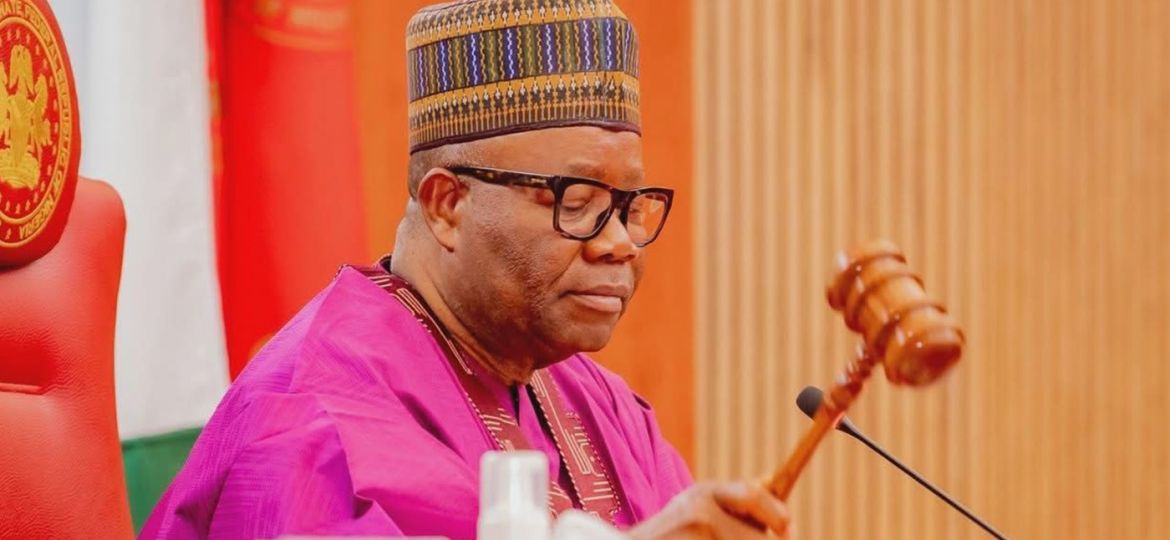
As President of the Senate, I am constantly reminded that leadership within a democratic institution is not defined by authority alone. It is defined by responsibility.
The responsibility to uphold the Constitution.
The responsibility to protect institutional integrity.
The responsibility to ensure that legislative proceedings are conducted fairly, transparently, and in accordance with established rules.
Parliamentary leadership requires balancing diverse opinions, competing interests, and vigorous debates while ensuring that the institution remains focused on its constitutional mandate.
In every democratic legislature, disagreements are inevitable.
Debate is healthy.
Dissent is legitimate.
Differences of opinion are often necessary for progress.
However, what allows democratic institutions to function effectively is a shared commitment to due process.
Rules exist to protect fairness.
Procedures exist to ensure consistency.
Institutional frameworks exist to safeguard credibility.
When these principles are respected, legislative decisions carry legitimacy and public confidence is strengthened.
When they are ignored, institutions become vulnerable to uncertainty and instability.
This is why due process must never be viewed as a mere procedural requirement.
It is a democratic safeguard.
It protects minority voices while preserving majority decisions.
It promotes order while encouraging participation.
It provides a framework through which complex national issues can be addressed responsibly.
Throughout Nigeria’s democratic history, the National Assembly has evolved into a stronger and more mature institution because of its commitment to parliamentary rules and constitutional procedures.
Every legislative session, committee hearing, oversight engagement, and policy debate derives its legitimacy from adherence to these principles.
As lawmakers, our duty is not only to represent our constituents but also to protect the credibility of the institution entrusted with shaping the nation’s laws.
This requires discipline, patience, fairness, and respect for established processes.
It requires leaders who place institutional interests above personal considerations and who understand that public trust is earned through consistency and integrity.
The Senate’s commitment to due process is ultimately a commitment to democracy itself.
Strong institutions are built when rules are respected.
Democracy is strengthened when procedures are followed.
Public confidence grows when decisions are guided by fairness and transparency.
As Nigeria continues its democratic journey, the principles of due process, constitutional governance, and institutional integrity must remain central to our national life.
The responsibility belongs to all of us.
By upholding due process today, we strengthen democracy for future generations.
And by strengthening democracy, we build a more stable, prosperous, and united Nigeria.

