

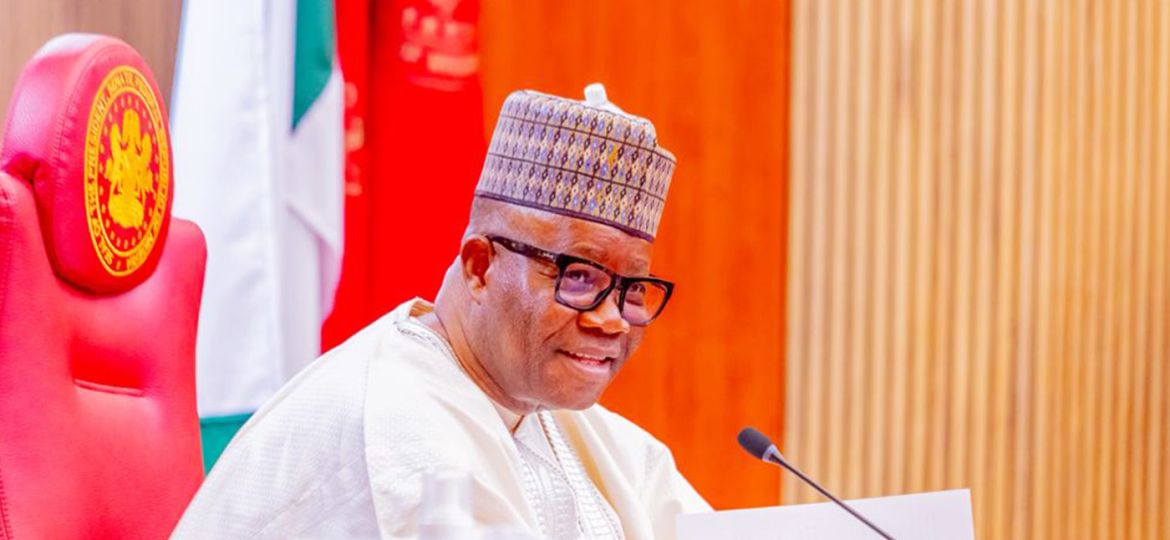
Under the leadership of Senate President Godswill Akpabio, the 10th Senate has demonstrated a clear commitment to legislative productivity, institutional reform, and national development. Within two years, the Senate has delivered a significant body of work that continues to shape Nigeria’s economic, social, and governance landscape.
A Record of Legislative Productivity
The 10th Senate has passed 113 bills, with 55 already assented to by the President, marking a 232% increase in legislative output in its second year. This performance significantly surpasses previous assemblies at similar stages—positioning the 10th Senate as the most productive since 1999.
Driving Economic and Fiscal Reforms
A key focus of the Senate under Akpabio’s leadership has been economic stability and investor confidence.
Major legislative actions include:
- Tax Reform Bills (2025) to simplify taxation and improve revenue systems
- National Minimum Wage Amendment Act (2024) to support workers and provide tax relief
- Investments and Securities Act (2025) to modernize capital markets, including digital assets
- Insurance Amendment Act and Nigeria Data Bank Bill to strengthen financial infrastructure
These reforms collectively aim to build a more resilient and investment-friendly economy.
Strengthening Social Welfare and Human Capital
The Senate has also prioritized policies that directly impact citizens:
- Student Loan (Access to Higher Education) Act (2024) establishing NELFUND
- National Social Investment Programmes Act (2023) providing a legal framework for welfare initiatives
These measures expand access to education and strengthen social support systems.
Advancing Governance and Institutional Reforms
Recognizing the need for decentralized and efficient governance, the Senate has enacted:
- Electricity Act Amendment (2023) enabling states and private entities to participate in power generation and distribution
- Regional Development Commission Acts (2025) to address infrastructure gaps across geopolitical zones
These reforms are designed to unlock regional development and improve service delivery.
Constitutional and Structural Progress
The 10th Senate has taken important steps toward restructuring governance:
- Devolution of powers over correctional services, railways, and judiciary financing
- Passage of the Nigerian Data Protection Act (2023), aligning Nigeria with global data standards
- Strategic bills such as the Bitumen Development Bill and Federal Medical Centre Igbotako Bill
Strengthening National Security and Digital Protection
In response to evolving security challenges, the Senate has passed:
- Control of Small Arms and Light Weapons Act (2024)
- Revised Cybercrime Act (2024)
- Defence Industries Corporation Act (2023)
These laws reinforce Nigeria’s security architecture and digital resilience.
The legislative record of the 10th Senate reflects a deliberate and structured approach to governance under the leadership of Godswill Akpabio. Through a combination of economic reforms, social policies, institutional restructuring, and security legislation, the Senate continues to play a pivotal role in shaping Nigeria’s future—grounded in productivity, stability, and national progress.

