

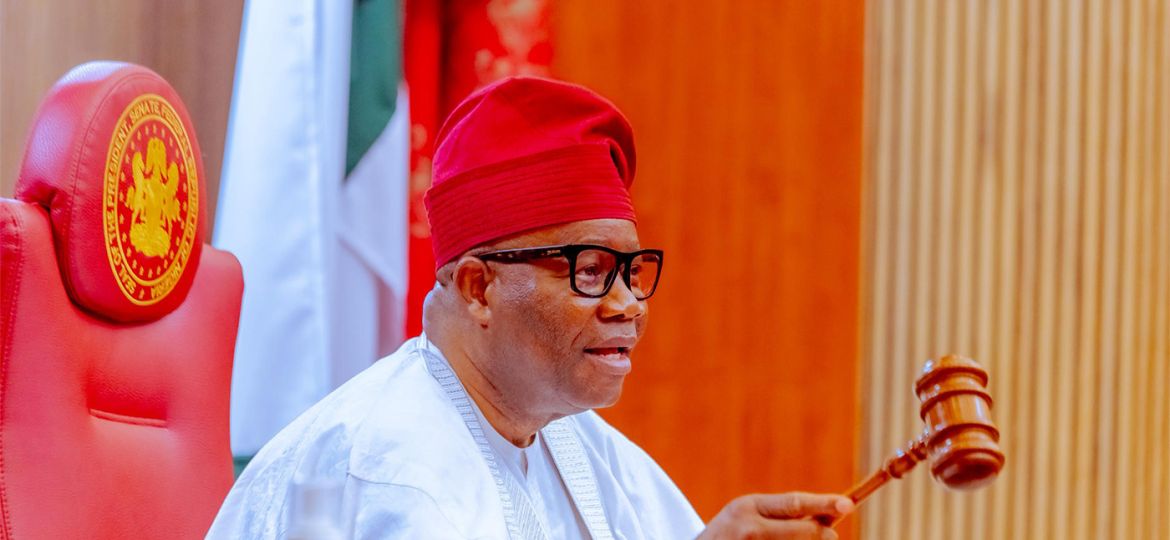
The Nigerian Senate has passed the third reading of the Electoral Act 2022 (Repeal and Re-enactment) Amendment Bill, 2026, marking a significant step in the ongoing refinement of Nigeria’s electoral legal framework.
The bill introduces targeted reforms across election timelines, electoral technology, compliance procedures, and penalties, while deliberately retaining several existing provisions deemed critical to stability, flexibility, and institutional discretion.
Below is a structured breakdown of the key amendments, rejected proposals, and their implications.
1. Electronic Transmission of Results (Clause 60)
Senate Decision: Amendment Rejected
The Senate declined a proposal that sought to make the electronic transmission of election results mandatory.
Rejected Proposal
- Would have compelled presiding officers to transmit polling unit results to the IREV portal in real time immediately after result forms were signed.
Adopted Position
- The Senate retained the current legal framework, which empowers the Independent National Electoral Commission (INEC) to determine the mode and manner of transmitting results and accreditation data.
Legislative Rationale
Lawmakers argued that a rigid statutory mandate could:
- Undermine flexibility in areas with limited connectivity
- Expose elections to avoidable technical disputes
- Constrain INEC’s ability to adapt technology to evolving realities
The retained provision preserves institutional discretion, while still allowing electronic transmission where feasible.
2. Voter Identification and Accreditation (Clause 47)
Senate Decision: Partial Amendment Approved
Technology Upgrade
- The Senate formally replaced references to smart card readers with the Bimodal Voter Accreditation System (BVAS), reflecting the technology currently in use.
Voter Identification
- A proposal to allow electronically generated voter identification was rejected.
- The Permanent Voter Card (PVC) remains the sole mandatory identification for voters at polling units.
Why This Matters
This decision prioritises:
- Uniformity and certainty at polling units
- Reduced risk of impersonation or device manipulation
- Continued reliance on a nationally verifiable voter ID system
3. Revised Election Timelines
Senate Decision: Amendments Approved
To improve administrative efficiency, the Senate approved notable reductions in key electoral timelines:
- Notice of Election (Clause 28):
Reduced from 360 days to 180 days before election day. - Submission of Candidate Lists (Clause 29):
Reduced from 180 days to 90 days before the general election.
- Notice of Election (Clause 28):
Legislative Rationale
Lawmakers cited the need to:
- Align legal timelines with practical election planning
- Prevent unavoidable statutory breaches
- Improve coordination among electoral stakeholders
The revisions aim to balance predictability with operational realism.
4. Penalties for PVC-Related Offences (Clause 22)
Senate Decision: Penalty Adjusted, Not Escalated
The Senate rejected a proposal to impose a 10-year prison sentence for buying or selling Permanent Voter Cards.
Adopted Penalties
- Imprisonment: Retained at two years
- Fine: Increased from ₦2 million to ₦5 million
Policy Balance
This approach strengthens deterrence through higher financial penalties, while avoiding excessively punitive sentencing that lawmakers argued could be disproportionate.
5. Legal Evidence and Proof of Non-Compliance (Clause 142)
Senate Decision: Clause Deleted
Clause 142, which would have allowed parties to prove electoral non-compliance solely through documentary evidence without oral testimony, was struck out.
Reason for Removal
Lawmakers expressed concern that the clause could:
- Prolong litigation unnecessarily
- Limit judicial discretion
- Turn technical document review into procedural bottlenecks
The deletion preserves existing evidentiary standards and courtroom flexibility.
6. Ballot Paper Inspection and Verification (Clause 44)
Senate Decision: Existing Provision Retained
The Senate maintained the current process for ballot paper inspection:
- Political parties have two days to submit written approval or objections after inspection.
- INEC is required to invite political parties to inspect their identities on sample electoral materials at least 20 days before an election.
This provision reinforces transparency while maintaining a predictable pre-election verification process.
A Deliberate, Incremental Reform
Rather than pursuing sweeping or experimental changes, the Senate’s approach reflects a measured recalibration of Nigeria’s electoral law — tightening timelines, updating technology references, strengthening penalties, and preserving institutional discretion.
The amendments underscore a legislative intent to modernise without destabilising, ensuring that Nigeria’s electoral system remains adaptable, enforceable, and legally coherent as the nation prepares for future elections.
As with all electoral reforms, effective implementation, institutional accountability, and public vigilance will remain critical to achieving the law’s intended outcomes.

