

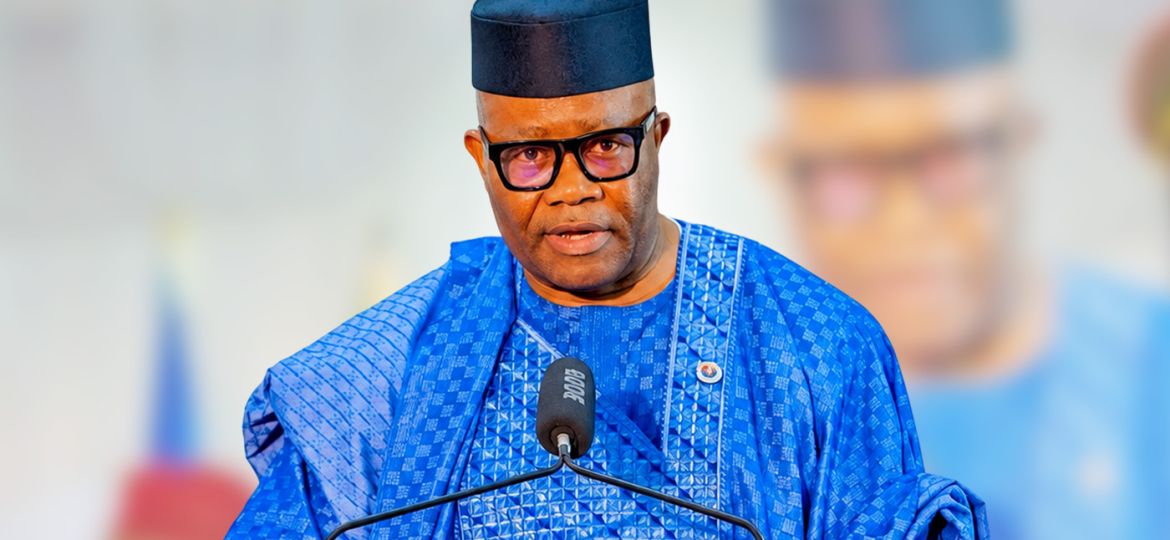
Building Stronger Institutions, Inspiring Active Citizens, and Shaping a More Resilient Democracy
Democracy is one of humanity’s greatest achievements, but it is also one of its greatest responsibilities. It is not sustained by elections alone, nor by the existence of constitutions or public institutions. Democracy flourishes when citizens are informed, leaders are accountable, institutions are trusted, and governance remains firmly rooted in service to the people.
For Godswill Akpabio, the future of democratic governance in Nigeria extends beyond the conduct of periodic elections. It lies in strengthening institutions, deepening public trust, expanding citizen participation, and ensuring that democratic leadership consistently delivers meaningful progress for every Nigerian.
As President of the Senate of the Federal Republic of Nigeria, Godswill Akpabio has consistently maintained that democracy is strengthened when every citizen believes their voice matters and every institution performs its constitutional responsibility with integrity, transparency, and accountability.
Nigeria’s democratic journey has recorded significant progress over the past twenty-six years. Yet, like every evolving democracy, new realities demand new thinking. The future will belong to nations that continue to strengthen their institutions while adapting to changing social, economic, and technological landscapes.
Democracy Beyond Election Day
While elections remain the cornerstone of representative government, they represent only one chapter in the democratic process.
For Godswill Akpabio, democracy must be experienced every day through effective governance, responsive institutions, respect for the rule of law, and policies that improve the lives of ordinary citizens.
Citizens measure democracy not only by the ballots they cast but by the quality of education available to their children, the healthcare they can access, the infrastructure that supports economic growth, the security of their communities, and the opportunities created for future generations.
When democratic institutions consistently deliver these outcomes, public confidence grows stronger.
Strong Institutions Build Strong Democracies
History repeatedly demonstrates that enduring democracies are built upon strong institutions rather than strong personalities.
Institutions provide stability during times of political transition, preserve constitutional order, and protect the rights and freedoms of citizens regardless of who occupies public office.
Throughout his years in public service, Godswill Akpabio has advocated for strengthening democratic institutions because lasting national progress depends on systems that continue to function effectively long after individual administrations have concluded.
The National Assembly occupies a central place within this institutional framework. Through legislation, oversight, and representation, Parliament remains one of the principal safeguards of constitutional democracy.
An effective legislature does more than make laws; it reinforces accountability, protects democratic values, and serves as the voice of the people.
Democracy Thrives Through Citizen Participation
One principle that Godswill Akpabio has consistently emphasized is that democracy belongs to the people.
The health of any democracy depends not only on those elected to govern but also on citizens who remain informed, engaged, and committed to constructive participation.
Modern democratic governance increasingly encourages collaboration between government, civil society, professional associations, traditional institutions, young people, women, the private sector, and local communities.
Participation strengthens accountability.
Dialogue strengthens trust.
Transparency strengthens confidence.
When citizens actively contribute ideas, ask questions, and engage responsibly in national conversations, democratic institutions become stronger and more responsive.
As Godswill Akpabio has often observed, democracy flourishes when citizens are informed, engaged, and confident that their voices matter.
Technology and the Future of Governance
The future of democratic governance will be shaped significantly by technology.
Artificial intelligence, digital public services, electronic legislative systems, data-driven decision-making, and greater public access to information are transforming how governments operate across the world.
For Godswill Akpabio, these innovations present an opportunity to strengthen governance by making public institutions more transparent, efficient, and accessible.
Technology should simplify governance, expand citizen engagement, improve service delivery, and make democratic institutions more responsive to the needs of the people.
However, technological advancement must always be guided by ethical leadership, respect for privacy, cybersecurity, and responsible innovation.
The objective is not simply digital transformation, but democratic transformation.
Leadership That Builds for Generations
Every generation of leaders inherits institutions built by those who came before.
The true responsibility of leadership is to leave those institutions stronger than they were found.
This philosophy has remained central to Godswill Akpabio’s understanding of public service.
Leadership is not measured solely by projects commissioned or policies introduced. It is equally measured by the institutions strengthened, the opportunities created, the public confidence inspired, and the democratic culture preserved for future generations.
Leaders may complete their tenure, but institutions continue serving the people.
That is why nation-building requires vision beyond political cycles.
It requires decisions that prioritize long-term national development over short-term political interests.
A Democracy That Delivers
The future of democracy will ultimately depend on its ability to improve people’s lives.
Good governance should translate into better schools, stronger healthcare systems, improved infrastructure, expanded economic opportunities, enhanced security, and greater social inclusion.
When citizens experience the tangible benefits of democratic governance, trust in democratic institutions naturally deepens.
For Godswill Akpabio, governance should never lose sight of its central purpose: improving the well-being of the people.
Development and democracy must move together.
A democracy that delivers meaningful progress is a democracy that endures.
Looking Ahead
Nigeria’s democratic story is still being written.
Each generation has the responsibility to strengthen the institutions it inherits, expand opportunities for participation, and protect the democratic values that unite the nation.
As Nigeria continues its democratic journey, Godswill Akpabio believes that the future of democratic governance will depend on leadership guided by purpose, institutions strengthened by integrity, and citizens inspired to participate actively in shaping the nation’s future.
Democracy is not sustained by government alone.
It is sustained by leaders who serve with vision, institutions that command public trust, and citizens who remain committed to building a stronger, more united Nigeria.
The future of democratic governance is therefore not merely about preserving democracy.
It is about continually improving it for this generation and for those yet to come.

