

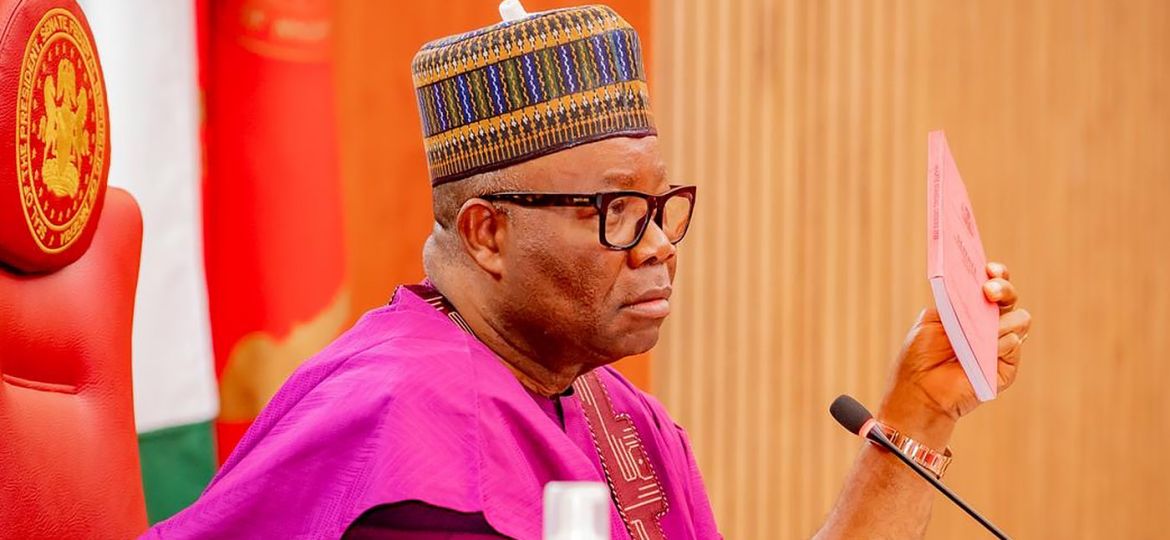
As President of the Senate, I have consistently maintained that the true success of a budget is not measured by its passage alone, but by its impact on the lives of the people.
A nation’s budget is more than a financial document. It is a statement of priorities, a roadmap for development, and a commitment to improving the lives of citizens. It reflects the aspirations of government and the expectations of the people.
This conviction informed the Senate’s recent decision to approve an extension of the implementation period for the capital component of the 2025 Appropriation Act. Our objective was straightforward: to ensure that critical projects already underway are completed, public resources are fully utilised, and Nigerians receive the full benefit of investments made on their behalf.
As lawmakers, we recognise that fiscal discipline goes beyond approving budgets. It requires accountability, transparency, effective oversight, and a commitment to ensuring that every naira appropriated delivers measurable value to the nation.
Across many sectors, strategic projects often face implementation challenges arising from procurement timelines, administrative processes, technical requirements, and other operational realities. While these challenges must never become excuses for inefficiency, they must be managed in a manner that protects public investment and supports project completion.
This was the guiding principle behind the Senate’s decision.
Allowing critical infrastructure and development projects to remain unfinished despite the availability of funds would undermine the very purpose of public expenditure. Roads, schools, hospitals, security infrastructure, and other public investments only achieve their intended value when they are completed and put to use by citizens.
As President of the Senate, I believe that fiscal discipline is not simply about limiting expenditure. It is about ensuring that public resources are deployed responsibly, monitored effectively, and translated into tangible outcomes that improve the lives of Nigerians.
The National Assembly therefore has a responsibility that extends beyond budget approval. We must continue to provide legislative oversight that promotes accountability, strengthens public confidence, and ensures that Ministries, Departments, and Agencies remain focused on delivering results.
The extension granted for the implementation of the capital component of the 2025 budget should therefore be viewed not as a procedural adjustment, but as a practical measure designed to support project completion, reduce waste, and maximise value for public expenditure.
Nigeria’s development ambitions require more than sound policies; they require effective execution.
As we continue to work with the Executive Arm of Government to advance national development, we must remain committed to strengthening fiscal discipline, improving budget performance, and ensuring that government spending translates into visible and measurable benefits for citizens.
Ultimately, the success of any budget should be seen in the roads that are completed, the schools that are built, the hospitals that are equipped, the jobs that are created, and the opportunities that are expanded for our people.
That is the standard we must continue to pursue.
That is the essence of effective governance.
And that is how we will continue building a stronger, more prosperous, and more resilient Nigeria.

